Rental taxation in Turin: cedolare, Irpef and practical deductions
by Santino Balistreri · · 6 minutes reading
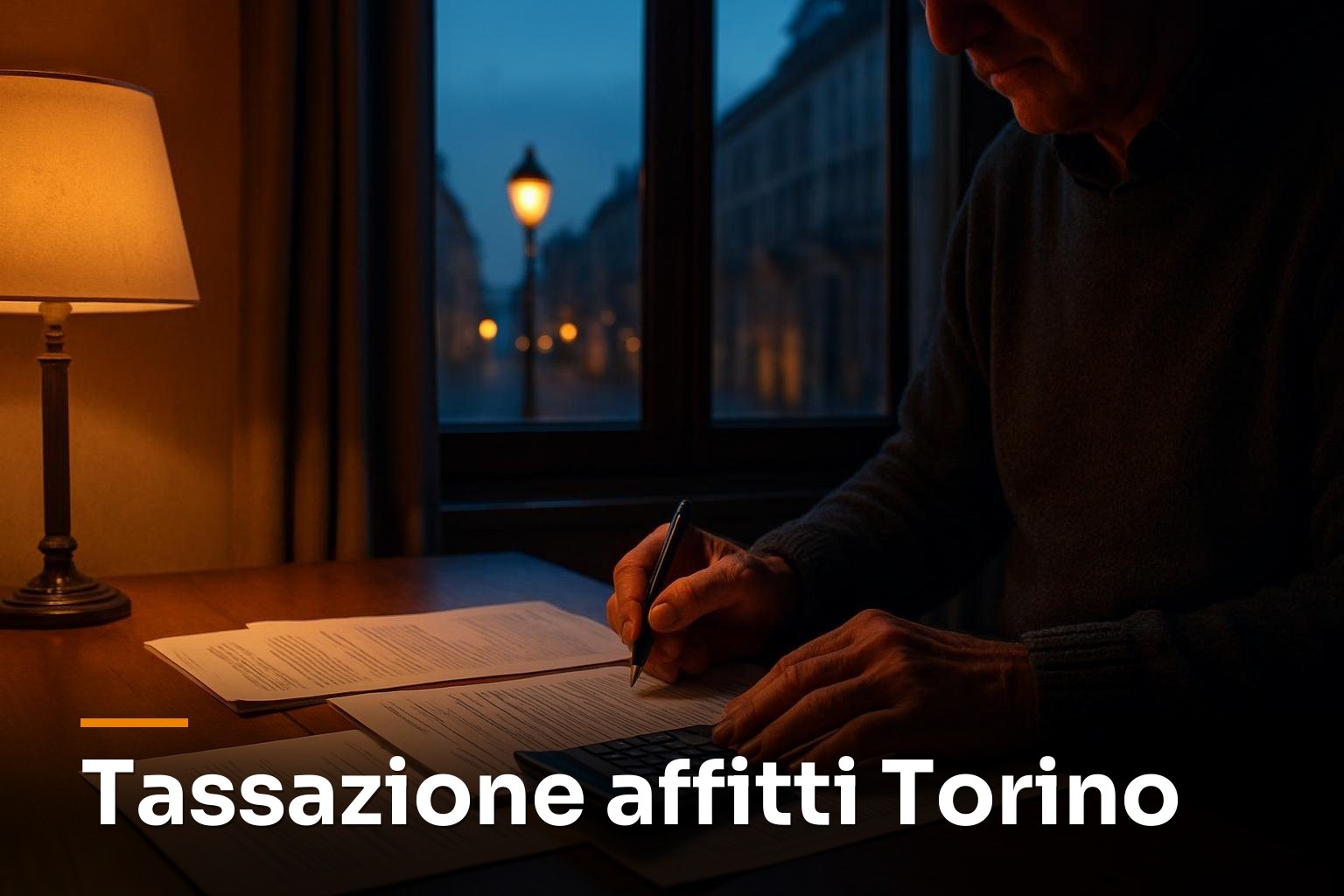
Understanding rental taxation in Turin is essential for anyone owning an apartment in the historic centre, San Salvario or peripheral areas: the choice between flat tax and IRPEF directly affects net yield and contractual decisions. This guide explains how tax regimes work, which expenses can be deducted, and practical advice to optimise rental income.
In brief
- The flat tax is an optional regime with a fixed rate on the taxable rental income; it avoids IRPEF and municipal and regional surcharges on rents.
- Under the ordinary regime (IRPEF) the rent is added to other income and may allow specific deductions and tax credits, but the rate is progressive.
- Expenses such as routine maintenance, municipal property tax (IMU) and condominium charges not borne by the tenant affect net income; some expenses are deductible only under IRPEF.
- The most advantageous choice depends on the owner's marginal tax rate, and the duration and type of contract (temporary, 4+4, youth flat tax, foresteria use, etc.).
Rental taxation in Turin: flat tax or IRPEF
The choice between flat tax and IRPEF is the first tax decision an owner in Turin must make when renting out a property. The flat-rate tax is an optional regime replacing IRPEF and related surcharges on rental income: the owner applies a fixed percentage to the agreed rent and cannot request rent increases or transfer the tax burden to the tenant. With the ordinary regime (IRPEF), the rent is added to the owner's other income and taxed progressively; in this case it is possible to use certain deductions and tax credits that reduce taxable income.
How to assess which regime is more advantageous
To decide between flat tax and IRPEF in Turin, consider three main factors: your personal marginal IRPEF rate, the contract type and actual expenses incurred for the property. If your marginal rate is high (because of significant other income), the flat tax may be more beneficial for its simplicity and predictable tax burden. If you have many deductible expenses (extraordinary maintenance, mortgage interest on rental purchase, etc.), the ordinary regime may allow you to recover part of these costs.
Deductible expenses and practical tax credits
Expenses affecting rental income must be evaluated carefully. In Turin, as elsewhere, relevant expenses include:
- Routine and extraordinary maintenance: routine expenses paid by the owner reduce taxable income; some extraordinary expenses can be deducted under the ordinary regime.
- IMU and TASI or local taxes: borne by the owner and affect net yield; not all taxes are deductible from rental income.
- Condominium fees: if not charged to the tenant, they reduce taxable income.
- Interest and mortgages: for properties purchased for renting, some mortgage interest can be deducted under the ordinary regime.
Note: many of these deductions apply only under IRPEF; choosing the flat tax means foregoing these deductions in exchange for fiscal simplicity and stability.
Contracts and tax implications in Turin
The contract type influences the tax choice: agreed rent contracts (often used in districts like San Salvario or Vanchiglia for students and workers) may benefit from reduced flat tax rates; temporary contracts differ from 4+4 agreements. In Turin, choosing an agreed rent contract can reduce the taxable base and facilitate renting in areas with high student or worker demand.
Practical calculation of net yield
To estimate your property's real yield in Turin start from the gross annual rent and subtract: IMU, condominium fees paid by the owner, expected maintenance costs, any mortgage interest and the chosen taxation (flat tax or IRPEF). An annual comparison shows which regime leaves more money in your pocket. For a guided method, our guide on how to calculate the real yield of a property in Turin includes a worksheet and practical examples.
Documentation and obligations: what must not be forgotten
In Turin, as in the rest of Italy, it is mandatory to register the lease agreement and pay the required taxes on time. If you choose the flat-rate tax (cedolare secca), you must exercise the option in your tax return or in the contract registration form and typically pay advance payments and balances according to tax deadlines. Always keep invoices and receipts for maintenance expenses: these are the basis for possible deductions under the ordinary regime.
Practical tips to optimise yield in Turin
- Consider the flat-rate tax if your Irpef rate is high and you prefer administrative simplicity.
- If you anticipate renovation work or significant expenses, compare the tax benefits of Irpef deductions before opting for the flat-rate tax.
- Use agreed-rate contracts where possible: they may promote occupancy of the property and, in some cases, offer more favourable tax conditions.
- Always register the contract and keep expense documentation for 5 years: this is useful in case of audits and for future calculations.
Frequently asked questions
When is it advantageous to choose the flat-rate tax?
It is beneficial if your marginal Irpef rate is high and you do not anticipate large deductible expenses on the property; the flat-rate tax offers tax certainty and simplification in rent management. It is often chosen by owners with employment or pension income who do not want to complicate their tax return.
What expenses can I deduct if I stay under the Irpef regime?
Under the Irpef regime, you can consider deductible various expenses borne by the owner, such as maintenance not attributable to the tenant, mortgage interest for income properties, and condominium fees charged to the owner. Deductibility depends on the nature of the expense and available documentation.
Does an agreed-rate contract change taxation?
Yes: an agreed-rate contract may provide advantages both in rent calculation and tax terms, making some conditions more favourable compared to the open market. In Turin, this type of contract is often used in areas with high student or worker demand.
Must I always register the contract even with the flat-rate tax?
Yes: contract registration is mandatory even when opting for the flat-rate tax; the option must be exercised and communicated according to prescribed tax procedures. Failure to comply may result in fines and interest.
To optimise lease taxation in Turin, it is always advisable to make a numerical comparison between the flat-rate tax and the ordinary regime, considering the contract duration, expected expenses, and your personal Irpef rate. If you are planning works before renting, also take a look at our article on bonus ristrutturazione e bonus mobilithat can affect the calculation of initial costs. If you wish, we can assess the specific case of your property in Turin and estimate the net yield under both regimes; contact us for personalised advice.
Do you have questions on this topic or about your property?
Talk to us