Land registry and planning checks before selling: essential checklist
by Santino Balistreri · · updated on · 4-minute read
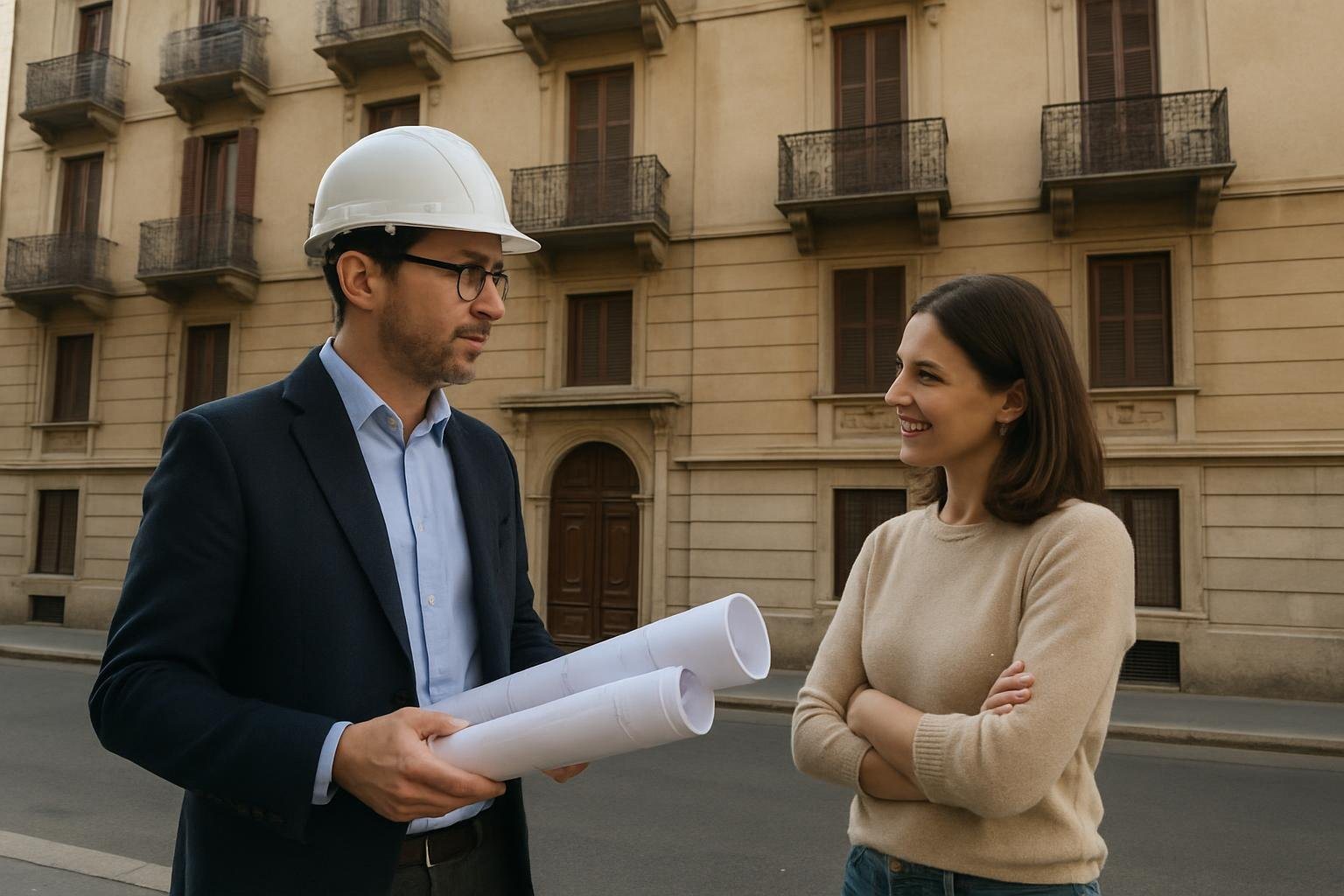
Why carry out land registry and planning checks before selling
I land registry and planning checks are essential to avoid delays, unexpected costs, and even hinder the completion. In Turin, as in other cities, many issues arise only in the final stages of the sale: discrepancies between the floor plan and actual condition, lack of permits for extensions or incorrect land registry entries. Verifying everything before publishing the listing protects the seller, reassures the buyer, and speeds up the deal closure.
Documents to gather immediately
- Land registry report (property and owners): contains identifiers, tax value, and intended use.
- Land registry floor plan: verifies it corresponds to the actual state of the apartment or unit.
- Deed of ownership (sale deed, donation, inheritance): confirms ownership and recorded encumbrances.
- Certificate of occupancy (when present): proves compliance with health and safety regulations.
- Building permits and concessions: authorisations for structural or expansion works.
- Renovation documentation (scia, cila, dia or equivalent notifications): useful to demonstrate work done according to regulations.
- Condominium rules and millesimal tables: if it is a condominium unit.
Practical checks to perform (checklist)
- Comparison of floor plan and actual state: inspect doors, balconies, walls and surfaces. Even minor differences can require regularisation or tax value recalculation.
- Verification of intended use: a room registered as A/2 but actually used as a workshop can create problems for sale and the buyer's mortgage.
- Check of succession and registrations: ensure all ownership records are up to date and there are no registrations limiting marketability.
- Check for building violations: check for municipal orders or seizures; in case of unauthorised works, consider the possibility of regularisation with a technician.
- Registrations and subdivisions: if the property results from a subdivision, ensure the land registry registration is complete and correct.
- Consistency between land registry data and municipal records: ensure what is declared to the Municipality (permits, concessions) matches the Land Registry.
How to handle discrepancies: practical procedure
If a discrepancy emerges, follow these operational steps:
- Contact a qualified professional (surveyor, architect, engineer) immediately for a detailed assessment.
- Assess whether the irregularity can be regularised with a CILA/SCIA or if it requires a more complex procedure and longer times.
- Calculate costs and timing for regularisation: it is often preferable to regularise before the sale to avoid unfavourable contractual agreements.
- If it cannot be regularised in time, inform the buyer and consider contractual solutions (pre-contract with resolution clause, price reduction linked to regularisation, etc.).
Specific planning checks for Turin
In Turin, it is advisable to pay attention to interventions affecting the area in recent years: changes of use in central zones, condominium modifications in historic buildings, and transformations in the urban belt. Districts such as San Salvario, Vanchiglia, Cit Turin or the Historic Centre may have specific restrictions linked to local urban plans or preservation orders. Before selling, choose a professional familiar with municipal regulations and the current Master Plan.
Practical advice before publishing the listing
- Gather all essential documentation: property certificates, floor plans, permits and certificates. This increases the confidence of interested parties.
- If you plan minor renovation works useful for the sale, first verify the need for building permits or communications to the condominium.
- Clearly declare any unauthorised works: hiding irregularities can block the deed and create legal liabilities.
- Prepare a summary report for the potential buyer outlining cadastral and planning conditions: this facilitates negotiations and mortgage approval.
Useful Links
For those considering the overall costs of selling, it is useful to also consider notary and tax expenses: Costs of selling a property in Turin: expenses and practical advice. Additionally, those wanting to stay updated on urban planning may find it useful to follow changes to the city’s master plan: Turin changes face: a new Master Plan for an environmental and innovative city.
Conclusion: practical advice and invitation
Before putting your property on the market in Turin, take time to check cadastral and planning matters: gather documentation, verify the floor plan corresponds to reality, check permits and any unauthorised constructions, and assess with a professional the need for regularisations. This prevents delays at the deed and increases the property's perceived value.
Quick practical advice: 1) make a document checklist and tick off each item; 2) involve a professional expert in Turin’s municipal regulations; 3) regularise what you can before the sale; 4) clearly inform the buyer of any ongoing works.
If you want an opinion on your property or a preliminary check of documentation, contact us for a technical and real estate consultancy: we can help you assess risks and timing in view of the deed.
Also read
Do you have questions on this topic or about your property?
Talk to us