Property donation: how to gift a home to a family member without mistakes
by Santino Balistreri · · updated on · 5 minute read
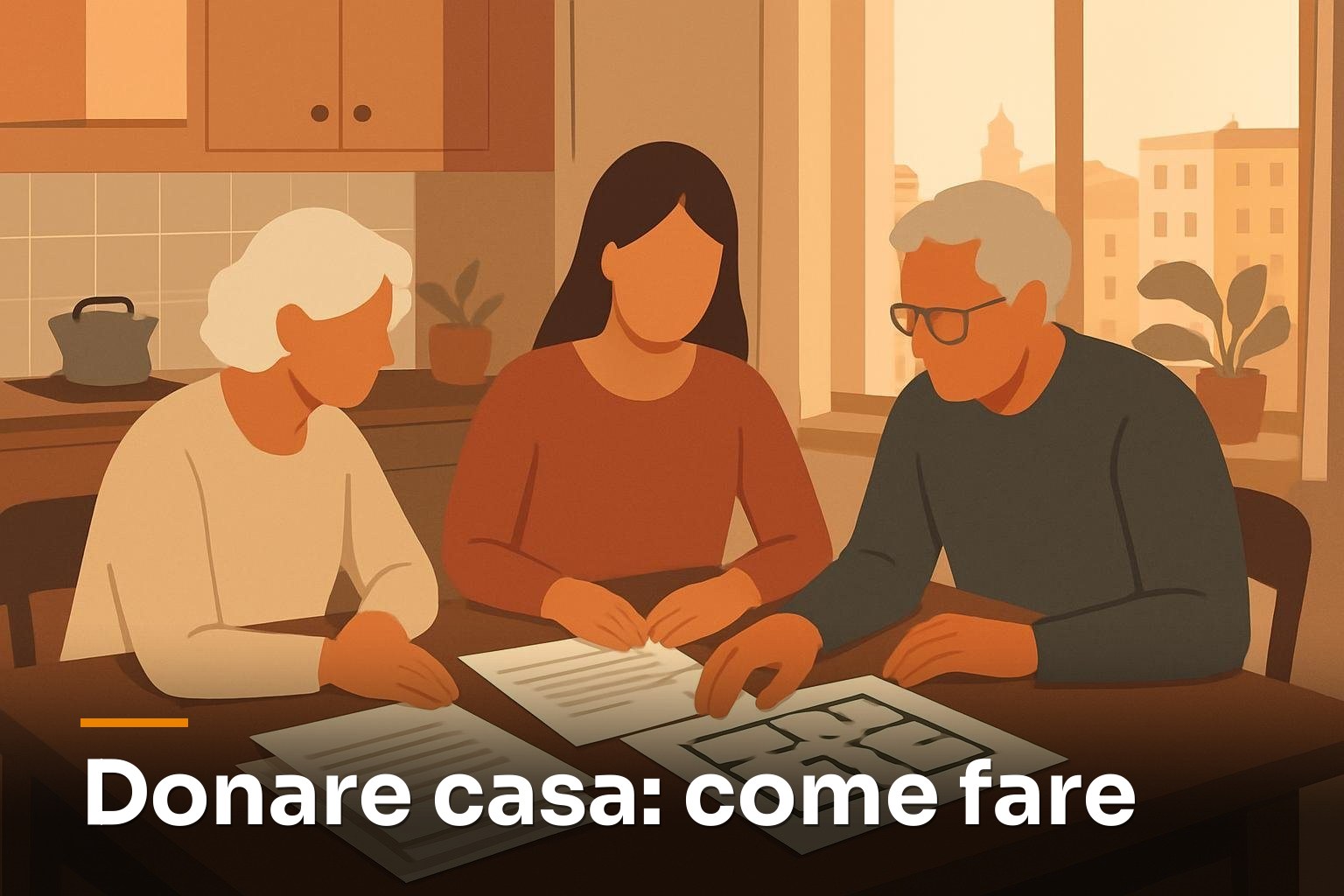
Are you considering a property donation to transfer a home to a child or relative? Donating property is an important act involving several aspects: legal form, cadastral and mortgage checks, tax consequences and effects on inheritance assets. In Turin, as in the rest of Italy, it is essential to proceed carefully, accompanied by a notary, to avoid surprises and protect both donor and recipient.
In brief
- Real estate donation always requires a public deed drawn up by a notary.
- It is possible to donate while retaining usufruct or the right of habitation to continue living in the house.
- Before the donation, cadastral and mortgage searches and checks at the Land Registry Office of Turin must be carried out.
- The donation affects inheritance shares: evaluate it with the notary to avoid succession disputes.
What is property donation and when is it advantageous
Real estate donation is the gratuitous transfer of ownership of a property. It is advantageous when you want to anticipate an inheritance, assist family members with special needs, or plan generational transfer. In Turin, many families consider this option to avoid future disputes or help children gain quicker access to a home, but the benefit depends on the overall asset situation and inheritance goals.
Donating while retaining usufruct or right of habitation
A common option is to donate ownership but retain usufruct or the right of habitation: this way the donor continues to live in the home and receive any income. Usufruct can be limited in time or last until the donor's death; the right of habitation is more restricted and concerns personal use. These options alter the economic value of the donation and must be assessed by the notary to calculate any taxes and the distribution of future inheritance shares.
Practical steps for making a property donation in Turin
- Preliminary checks: request a cadastral certificate and updated floor plan, verify the absence of mortgages or charges at the Land Registry Office of Turin, and ensure the property complies with planning and building regulations.
- Property assessment: estimate the property's market value; in Turin, values vary significantly between districts (e.g. Historic Centre, Crocetta, San Salvario), so an appraisal or market comparison is useful.
- Choice of form: decide whether to retain usufruct, include conditions or reservations, or transfer full ownership. Each option has different legal rights and succession implications.
- Notarial deed: the donation must be drafted and executed by a notary. The notary will verify identity, ownership, any liens, and prepare the deed which will then be registered in public records.
- Registration and transfers: after the deed, the notary handles registration at the Land Registry and cadastral transfers to update ownership in the records.
Tax and contribution aspects to consider
Donation entails tax obligations: registration, mortgage and cadastral taxes, and possible inheritance taxes depending on family relationships and applicable exemptions. Moreover, transferring property may affect tax benefits related to the main residence or previous concessions; these impacts should be evaluated before signing.
Effects on inheritance and legitimate heirs
The donation is subject to forced heirship rules: if the donation infringes reserved shares of legal heirs, they can contest to reduce the donation within legal limits. Therefore, when donating significant assets like a family home, it is advisable to plan with the notary and discuss with relatives to avoid disputes.
Alternatives to donation
If donation is not the best option, consider facilitated sale between family members, establishing a right of habitation or usufruct contract with compensation, or other asset protection methods. Each alternative has fiscal and practical pros and cons, so choice should be tailored case by case.
Practical advice before donating
- Speak openly with involved family members to align expectations and reduce litigation risks.
- Obtain a property valuation: value affects taxes and how the donation impacts inheritance.
- Carry out cadastral and mortgage checks and regularise any building irregularities before the deed.
- Consult the notary for protective clauses (e.g. usufruct reservation, conditions, withdrawal agreements).
Also read
Frequently asked questions
Can I donate my home to my son and continue living there?
Yes: it is common to transfer ownership while retaining usufruct or the right of habitation, so the donor keeps the right to live in the property. This choice must be formalised in the notarial deed to have legal and tax effects.
Is a notary always required for real estate donation?
Yes, donating a property requires a public deed drafted and signed before a notary, who also handles registration and cadastral transfers.
Does the donation affect the inheritance shares of other children?
It can: if the donation reduces the reserved share of heirs, they may challenge the deed. To avoid issues, plan with the notary and, if possible, involve heirs in discussions.
Which documents are needed to start a donation in Turin?
Identity documents of the parties, the cadastral survey and updated floor plan, certificates proving the absence of mortgages from the Land Registry, and any document certifying the property's compliance with urban planning and building regulations are required.
If you are considering a property donation in Turin, we can help you verify the initial documentation and clarify practical alternatives. For personalised advice, it is always useful to consult a notary: if you wish, contact us and we will guide you through the first steps.
For further details on the checks to carry out before transferring a property, see also our guide on essential checks before buying a house in Turin and the checklist for selling a house in Turin.
Do you have questions on this topic or about your property?
Talk to us