Home renovation: reading quotes, choosing the company, protecting yourself
by Santino Balistreri · · 5 minute read
Renovating your home is an important step, especially if it's an apartment in Turin in districts such as Crocetta, San Salvario or Cit Turin. To avoid surprises regarding timing, quality, and costs, it's essential to know how to read quotes, carefully evaluate contractors, and formalise everything in a technical specification that protects the client. This practical guide explains how to proceed, what to ask for, and which clauses to include in the contract.
In brief
- Request at least 3 detailed quotes: materials, labour, timing, and payment terms.
- Prefer contractors with VAT number, liability insurance, and verifiable references; request the DURC for significant works.
- Draft a technical specification listing materials, brands, tolerances, timing, and penalties for delays.
- Keep quantity surveys, invoices, and documents for tax deductions and any disputes.
How to Compare Quotes: What to Check Line by Line
When you receive quotes, don't stop at the total amount. In Turin, where prices vary between the Historic Centre and suburbs like Lingotto or San Paolo, it's important to compare individual items: quantities and unit prices of materials, expected hours of work, technical specifications (e.g., type of plaster or energy class of fixtures), and exclusions. A quote that seems cheaper may hide exclusions (waste disposal, scaffolding, ancillary works) that later increase the final price.
Check if the quote includes a site inspection and measurement survey or if prices are estimated. Always request a quantity survey or a detailed list that allows direct comparison between offers. Finally, evaluate the indicated start and completion times and whether penalties for delays are foreseen.
Choosing the Contractor: Documents and Signs of Reliability
To choose the right contractor look beyond the price. Request and verify:
- VAT number and Chamber of Commerce registration: confirm the existence of the company.
- Liability insurance and ten-year policy if required for structural renovations.
- References and past works: contact recent clients or visit completed sites.
- Certifications of installers (e.g., plumber, electrician) and, for complex jobs, the SOA certification if required.
- DURC and contribution regularity where required by law, especially for works above a certain size or on common parts of condominiums.
A good relationship with the contractor starts with clear communication: ask who will be the site manager, how often you will review progress, and how change requests will be handled. If possible, involve a trusted technician (surveyor, architect or engineer) to draft the project and verify correct execution.
The Specification: The Document That Protects You
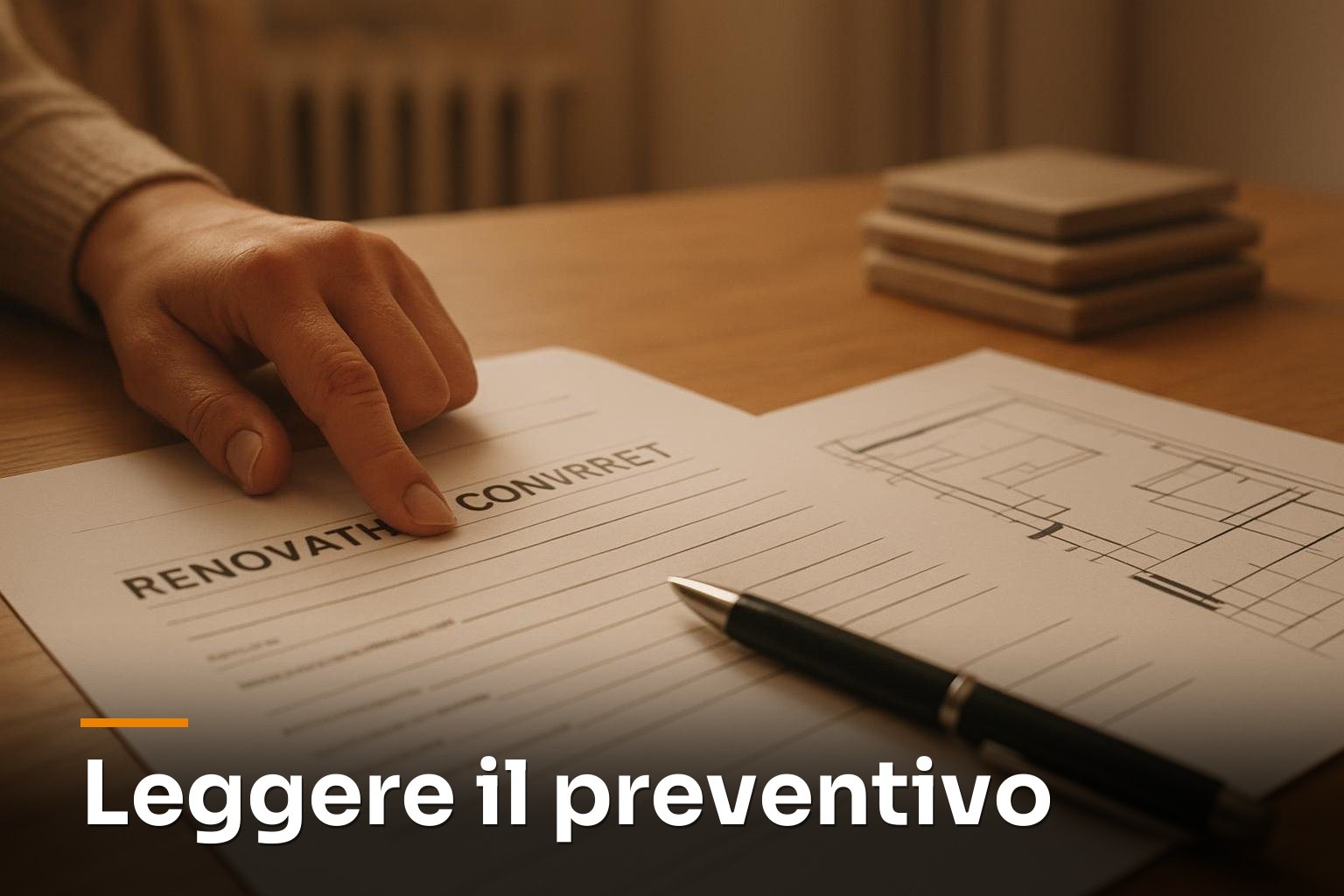
The technical specification is the core protection for anyone renovating a home. It must be attached to the contract and contain detailed descriptions: materials (with brand or minimum performance), thicknesses, types of finishes, installation methods, types of certifications for systems and inspections. Clearly state acceptable tolerances and ongoing checks.
Include clauses on execution times, payment by progress stages linked to actual measurements, daily penalties for unjustified delays, and dispute resolution methods. Also provide management of variations: how they will be estimated, authorised, and calculated.
Guarantees, Inspections, and Final Documentation
After completion of works, request clear documentation: detailed invoices, compliance certificates for systems, updated APE certificates if necessary and, in case of structural works, building conformity reports or other attestations required by local authorities. Keep the quantity survey and specification for any disputes or to claim tax deductions.
Verify timing and procedures for inspections: who performs the final check and which inspections will be carried out. A good practice is to make a written list of defects found during handover and agree deadlines for their correction.
Preventing Delays and Unexpected Costs
The most common delays arise from late deliveries, structural surprises, or municipal permits. To minimise them: choose readily available materials, clearly define responsibilities for waste disposal and work on common condominium areas, and promptly check the need for permits (for example, authorisations from the Turin Municipality or notifications to the condominium). Include a clause specifying how to handle unforeseen findings (old pipes, undocumented masonry): for example, request a written estimate before carrying out extra work.
Tax Aspects and Deductions
Keep all documentation for tax deductions; regulations can change, so review current legislation or consult your accountant. If you intend to benefit from energy efficiency or renovation incentives, request detailed invoices and compliance declarations from the contractor. For practical information on deductions available in your city, you can consult our article. Renovation Bonus in Turin.
When to Involve a Technician and Useful Links
For works that modify the structure, internal layout, or systems, it is advisable to hire a qualified professional for design, construction management, and municipal procedures. The Building Compliance Report (RRE) may be required in some cases: if you are unfamiliar, read our in-depth guide on when it is useful and whom to contact. RRE: why obtain the Building Compliance Report.
Frequently asked questions
How many quotes should you request?
Ask for at least three detailed quotes to compare prices, quantities, and specifications. Ensure all quotes include the same items for a fair comparison.
Is it better to choose the cheapest contractor?
Not necessarily: the lowest price may conceal poor materials or exclusions. Consider references, insurance coverage, and contract clarity alongside the price.
What must the specification document absolutely contain?
The specification must indicate materials with minimum characteristics, execution methods, timing, penalties for delays, payment terms, and management of variations. It must be attached to the main contract.
How to protect yourself during condominium works?
Check the condominium regulations and required permits; formally notify the administrator of the works, and include in the specification the measures protecting common areas and waste disposal.
Practical advice: keep all documents (quotes, invoices, specifications), take photos of the site at key stages, request payments staged on progress, and maintain written communication with the contractor. If you have technical or legal doubts, involve a professional before signing the contract. If you want practical advice for your renovation project in Turin — from the Historic Centre to San Salvario or Lingotto — contact us for a non-binding consultation: we can help you read a quote or check a specification.
Do you have questions on this topic or about your property?
Talk to us