Luxury tourist market: signs for investors after Torre Coccaro acquisition
by Santino Balistreri · · updated on · 5 minute read
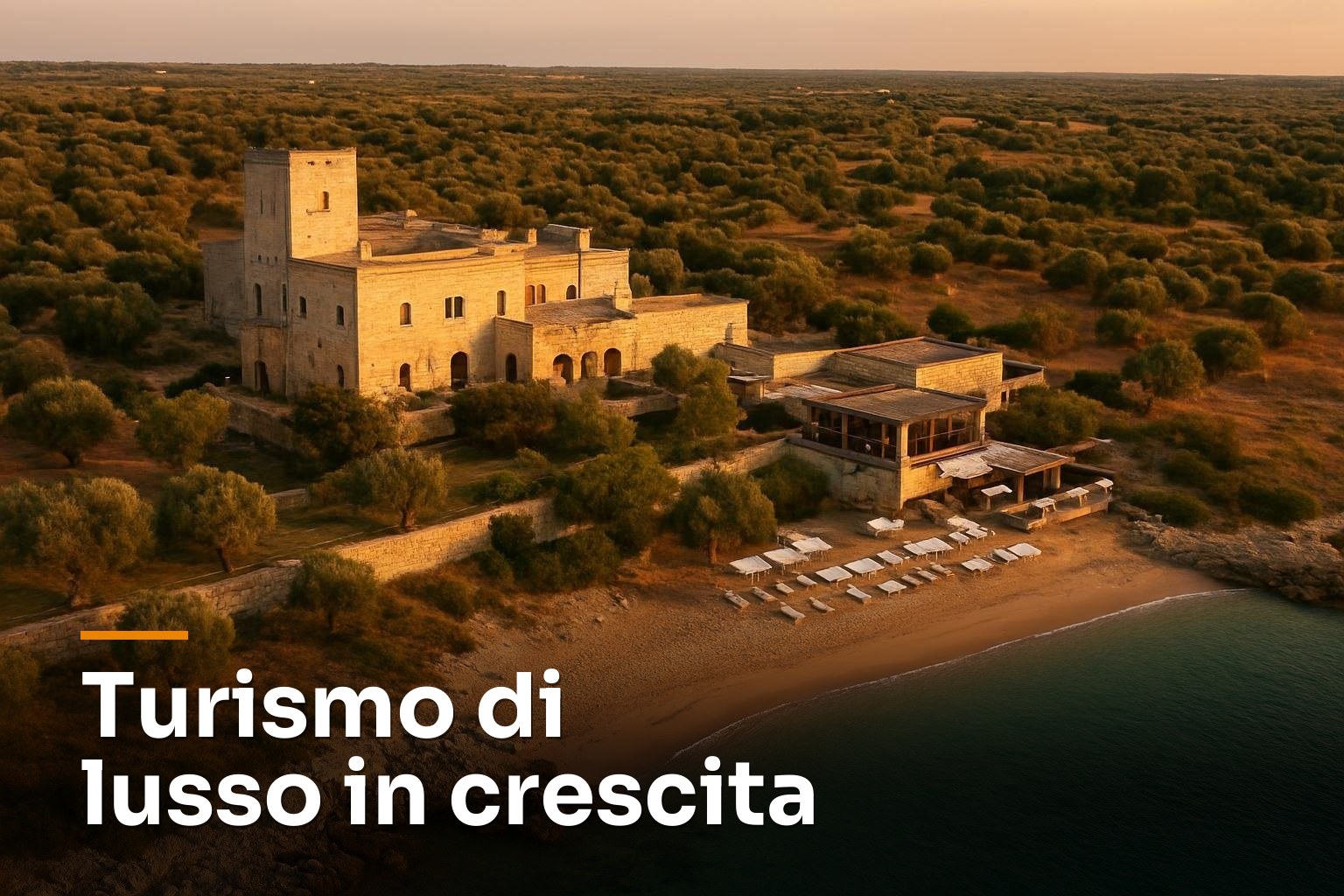
The acquisition of the Torre Coccaro farmhouse by an emerging group in the luxury hospitality market is an important signal for those following the luxury tourist market: it indicates consolidation, interest in prestigious destinations and new real estate enhancement strategies. For real estate investors and owners wishing to convert or enhance a property for hospitality use, understanding these movements helps evaluate risks, investment timing and potential returns.
In brief
- The purchase of a historic facility like Torre Coccaro shows interest in luxury assets in established destinations and protected landscapes.
- High-end hospitality operators focus on experience, territory and sustainability rather than massive expansion of rooms.
- For real estate investors the key word is enhancement: targeted renovations, premium services and management agreements can increase asset value.
Why the luxury tourist market matters for investors
The luxury tourist market attracts capital because it combines high revenues per accommodation unit with relatively stable demand in top destinations. In Turin and surrounding areas, interest in prestigious properties is evident both for cultural appeal and corporate and events demand. Investing in luxury tourist properties requires consideration of different factors than in residential: location, offered experience, brand and management capacity are decisive.
Trends emerging from the Torre Coccaro deal
The acquisition of a historic farmhouse and its beach club confirms some key trends in Italy's luxury tourist market. First, preference for properties with strong territorial identity: real estate derived from historic assets or natural contexts has intangible value that luxury brands know how to monetise. Second, focus on experience rather than volume: few rooms but exclusive services (spa, quality dining, experiential activities) generate higher margins. Third, integration with the territory: partnerships with local producers, events and socio-economic development initiatives are part of the positioning strategy.
Practical implications for those wanting to invest in tourist properties
If considering the purchase or conversion of a property into a prestigious hospitality facility, take these practical guidelines into account. First, verify urban and landscape restrictions: historic buildings or coastal zones often require specific permits and longer renovation times. Second, define the management model: operating directly, entrusting management to a brand or signing a management or franchise contract changes risk and return profile. Third, calibrate investment in services: spa, high-level restaurants and experiential activities increase appeal but require specialised teams and operational investment.
Financing, timelines and expected returns
In Turin today, the mortgage market and financial conditions are more cautious compared to previous peaks, so planning the financial structure is essential. For tourist-hospitality redevelopment projects, consider longer work times (permits, construction and commercial launch) and a budget for pre-opening and brand positioning. Returns in the luxury segment can exceed average per room, but leverage depends on destination seasonality and management quality.
How to assess a property to convert into a luxury facility
- Evaluate location: accessibility, nearby attractions (sea, cultural heritage, events) and potential demand.
- Regulatory analysis: historic restrictions, urban services and intervention limits.
- Realistic business plan: revenue estimate per room, operating costs and seasonal occupancy forecast.
- Operational partnerships: sourcing experienced operators in managing luxury hotels or private clubs.
- Territorial marketing strategy: enhancing food and wine, outdoor activities and local relationships.
The role of brands and local identity
Unlike a simple makeover, luxury enhancement requires consistency between brand and local identity. In Turin, for example, properties near the historic centre or districts like San Salvario and Vanchiglia can focus on cultural events, business traveller offers and collaborations with galleries and quality restaurants. A brand that highlights the property's history, local cuisine and personalised hospitality achieves better medium-term results.
Risks to consider
Among the main risks: underestimating renovation costs, delays in permits, marked seasonality of demand, and difficulty finding high-level management. Additionally, competition among major brands can compress margins in already mature destinations. To mitigate these risks, it is useful to develop a prudent financial plan, provide reserves for unforeseen events, and test the concept with modular solutions before large investments.
Useful Links
For those wanting to explore concrete aspects of investment and renovation, it may be useful to read our guide on Investing in tourist properties: lessons from the Hotel de la Poste in Cortina and the practical guide on Renovation in Turin: procedures, permits and practical timelines.
Also read
Frequently asked questions
Is it worth transforming a prestigious house into a luxury hospitality property?
It depends: if the location has sustained tourist demand, accessibility and local attractions, the transformation can significantly increase the property's value. However, a realistic business plan and an operational partner with experience in luxury hospitality are essential.
How important are landscape and historical constraints?
Constraints can greatly impact timing and costs: often they require projects agreed with authorities, specific materials, and sometimes limit structural interventions. Checking before purchase is essential to avoid surprises.
Is it better to sell to an industry operator or develop the project independently?
Selling to an established operator reduces operational risk and speeds up economic return, but may limit potential profit compared to independent development. The choice depends on financial capacity and willingness to manage hospitality activities.
What is the impact on the local community when a luxury brand arrives?
It can be positive if the project involves local suppliers, creates employment, and enhances the area; but it is necessary to manage impacts on local prices, land use and accessibility for residents. Sustainable and participatory projects are the most appreciated.
Practical advice: before investing, conduct urban and technical due diligence, request profitability projections based on realistic scenarios, evaluate management contracts with clear KPIs, and consider modular solutions to scale the offer. If you want concrete advice on your property or the potential of a luxury tourism project, contact us: we can help you assess opportunities and risks with local and practical data.
Do you have questions on this topic or about your property?
Talk to us